Construction of the project is scheduled to start in three weeks on campus , according to university officials.
Vice President for Government Affairs Mark Burnham described this project as “a huge deal.”
Burnham said the $730 million project has so far received $100 million in federal funds.
Burnham said MSU won the ability to build the nuclear physics facility in 2008. For the past three years, the project management teams have been working on designs and equipment for the facility.
In January, Congress approved issuing the project $55 million under the 2014 federal budget.
Providing the project with federal funding has been discussed since April 2012, when President Barack Obama included FRIB in his budget proposal for the next federal fiscal year.
The new building will serve scientists from around the world, allowing them to come to MSU to research and discover the properties of isotopes.
As of now, there are only two other FRIB facilities in the world.
“If you wanted this research lab anywhere else, you would have to go to Germany or Japan,” Burnham said.
Scientists believe new discoveries of these rare isotopes can lead to advances in medicine, disease diagnosis, homeland security, industry and technology.
When the new facility is completed, there will be 400 new faculty positions and 150 new student positions available.
The new facility will be an addition on to the National Superconducting Cyclotron Laboratory, which studies nuclear physics and has been at MSU since the 1950s.
Rendered photos have been made available for public viewing and can be seen online on FRIB’s official website.
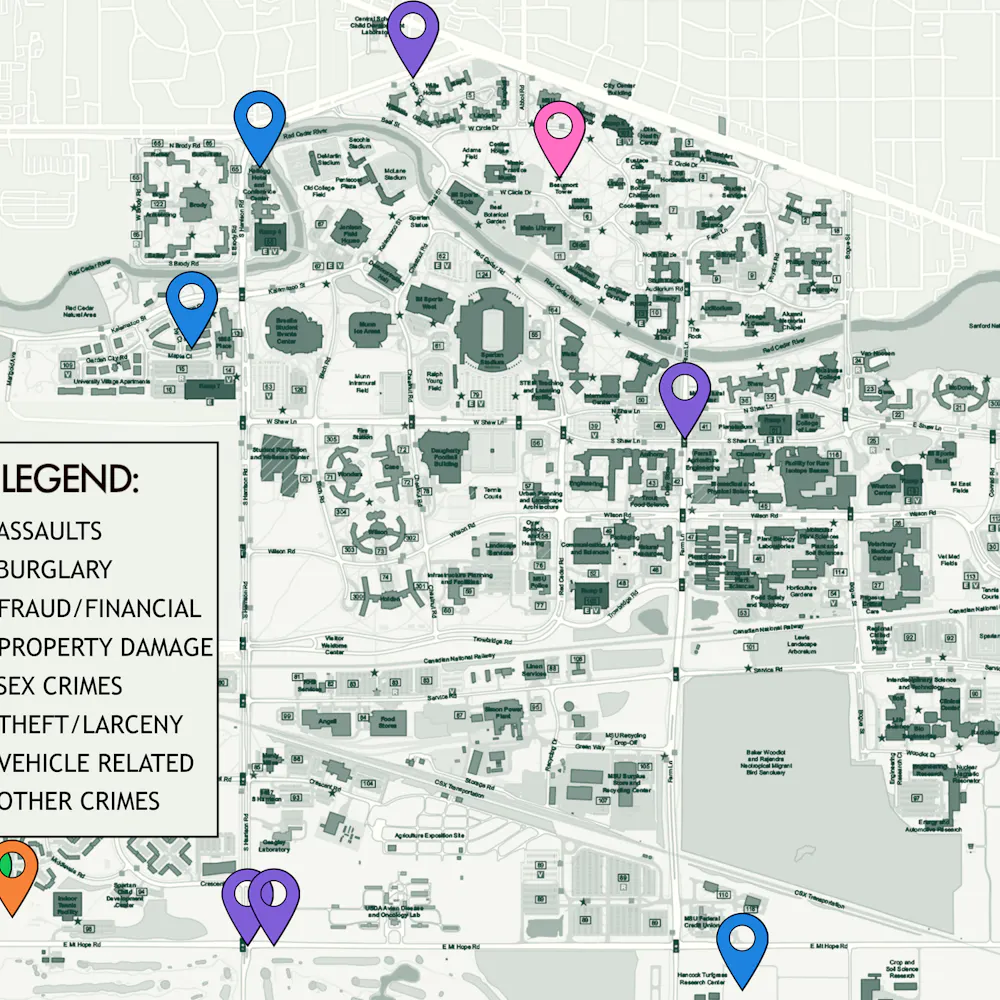
The facility will be located on the corner of Wilson Road and Bogue Street. The project management team believes the construction will be finalized in June of 2022.