Yu Li struggled to find the right words to describe it. Li, a finance freshman originally from China, glanced down at the piece of paper in her hands before she let it drop to her desk. She decided she needed her hands to complete the task before her. Li used English to describe a picture to fellow international student and medical technology freshman Hadi Sleel, originally from Saudi Arabia, during an intensive English course Thursday morning.
Li and Sleel will spend this semester taking classes, like Thursday’s course, through the English Language Center to improve their English.
While both international students plan to earn a degree from MSU, many American students won’t become masters of another language and even more won’t forge an international friendship.
The growing divide between American and international students highlights an area in which MSU hopes to improve — global communication, said Peter Briggs, director of the Office for International Students & Scholars.
“It’s a real interesting snapshot of the campus in terms of ‘Yes, we’re an international campus, but we are in the proximity of difference,’” Briggs said. “We’re not actually engaged in difference.”
Unbalanced exchange
In 2006-07, MSU ranked 16th among the top 25 U.S. institutions with the largest international student population, according to the Institute of International Education’s Open Doors Report on International Education Exchange.
Enrollment numbers from the Office of Planning and Budgets showed more than 3,800 undergraduate and graduate international students came to MSU in fall 2007.
For 2007-08, more than 2,900 students participated in the university’s study abroad program.
The numbers don’t even out, and the Institute of International Education reported a growing imbalance when it comes to an international exchange of students.
A main difference between the degrees received by American students and international students is what language the degree was earned in, said Douglas Noverr, dean of the College of Arts & Letters and acting chairman of the Department of Spanish and Portuguese.
“The big difference is they’re coming into a university where all their studies will be in English unless they’re taking a foreign language course,” Noverr said. “Very few American students go to universities in other countries and actually study in that language.”
A study conducted last year by a graduate class taught by labor and industrial relations professor Ellen Kossek reported that international students found their American counterparts at MSU welcoming, but many didn’t have American friends, Briggs said.
At the same time, MSU students said they enjoyed living on a campus with a high population of international students, but many didn’t have friends from outside the U.S.
Although MSU students create a supportive environment for international students, many don’t try to speak with the international students, Briggs said.
American immersion
The English Language Center offers classes to international students who didn’t meet the minimum English proficiency required to take academic courses at MSU, said the center’s associate director Patricia Walters.
Classes focus on improving a student’s grasp of the language before releasing them into the English-dominated academic courses and accompanying lectures at MSU.
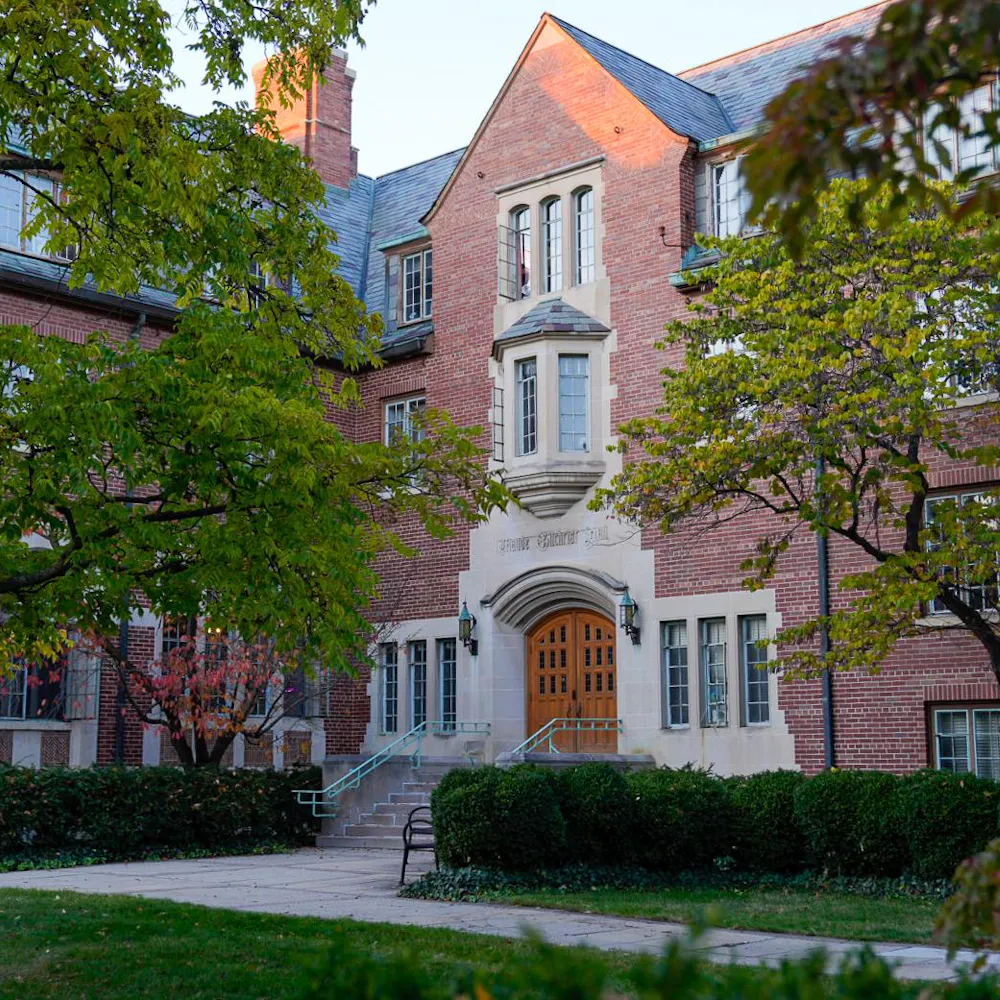
Graduates of the center often return to the center’s headquarters, A-714 Wells Hall, to seek advice for anxiety of being integrated into academic courses.
“Sometimes they go into their academic classes and being the non-native speaker, no one cares,” Walters said. “No one’s interested that you speak another language or come from another country.
Support student media!
Please consider donating to The State News and help fund the future of journalism.
“When they come back here, they can recognize most of our staff all lived abroad, all studied other languages. We’re very interested in those kind of things.”
American students don’t try to isolate international students, Briggs said, but it can be hard to become part of a global society because two oceans separate the U.S. from the rest of the world.
“Lots of other people desire to get what we have, which is English,” Briggs said. “That makes us rather complacent in facing the challenges of learning a second language.”
Becoming bilingual
But the stakes are rising for American students and the pressure is on to learn another language.
“As language becomes much more usable in terms of career goals and career interests and more important in terms of diplomacy, that ups the level of interest,” Noverr said.
Employers look for future employees who have a background in another language when combing through lists of candidates, but just receiving a foreign language degree from MSU might not be enough, Noverr said.
“I think anyone that graduates with an undergraduate degree in a language probably almost all need additional extensive language training aside from the basic, basic degree,” Noverr said.
A cultural difference could add to the reported lack of interaction between international and American students, said Cindy Chalou, acting director of study abroad programs.
“I think that perhaps it’s part of the culture,” Chalou said. “For the parents of Asian scholars, it’s still more common for the family to send study abroad to obtain full degrees.”
Many American students opt to complete only a portion of their studies abroad, Chalou said.
For Li, traveling halfway across the world is an invaluable opportunity to build her English skills.
“I think everybody can go out (of the) country and study because the language sometimes easier to learn,” she said.
English junior Megan Polom decided to continue studying Spanish when she came to MSU three years ago – but Polom said increasing global competition for jobs fueled her decision.
People who are bilingual will get jobs over other candidates, Polom said, and she believed she could hold her own in a Spanish-speaking workplace.
“I know I could at least do the basics,” she said. “Of course, the more you are in the environment, the easier it gets.”
Although hospitality business senior James MacKenzie said he couldn’t fit any Spanish classes into his schedule, learning the language topped his to-do list.
“We’re the only country in the world that doesn’t require a second language in general education classes, so that says something about it,” MacKenzie said.
Discussion
Share and discuss “A common voice” on social media.