The weight of a 11.9-percent tuition increase and $31 million in university cuts has been placed on the shoulders of students, faculty and staff members after the MSU Board of Trustees approved the 2003-04 budget Thursday.
Coupled with the board's decision in May to raise housing rates by 6 percent, students living on campus will be paying an extra $300 per semester compared to those in fall 2002.
A 9.9-percent tuition increase will appear on student bills for fall, while the other 2 percent increase will begin in summer 2004.
The decision to increase tuition met with resistance from Trustees Colleen McNamara, Joel Ferguson and Dorothy Gonzales, who said other resources of funding and cuts needed to be evaluated before students and their families start handing over more money.
"Progress on the backs of students is not progress at all," Gonzales said. "We don't have all the answers here."
Increasing tuition above the rate of inflation will strain university and legislative ties even more, she said.
University officials said MSU already receives $87 million less than University of Michigan and Wayne State University in per student funding.
"I don't believe we are looking out for students the way they should be and neither is the state of Michigan," McNamara said. "I don't believe Michigan families can cope with this."
If the tuition increase trend continues, the universities could be in danger of receiving a tuition cap by the state Legislature, she said.
But the majority of the board agreed the combination of cuts and tuition hikes is needed to combat the reality of decreased state funding.
"I don't know how else we can really do this," Trustee Don Nugent said. "Is it pleasant - no, but is it good sound proposal - yes."
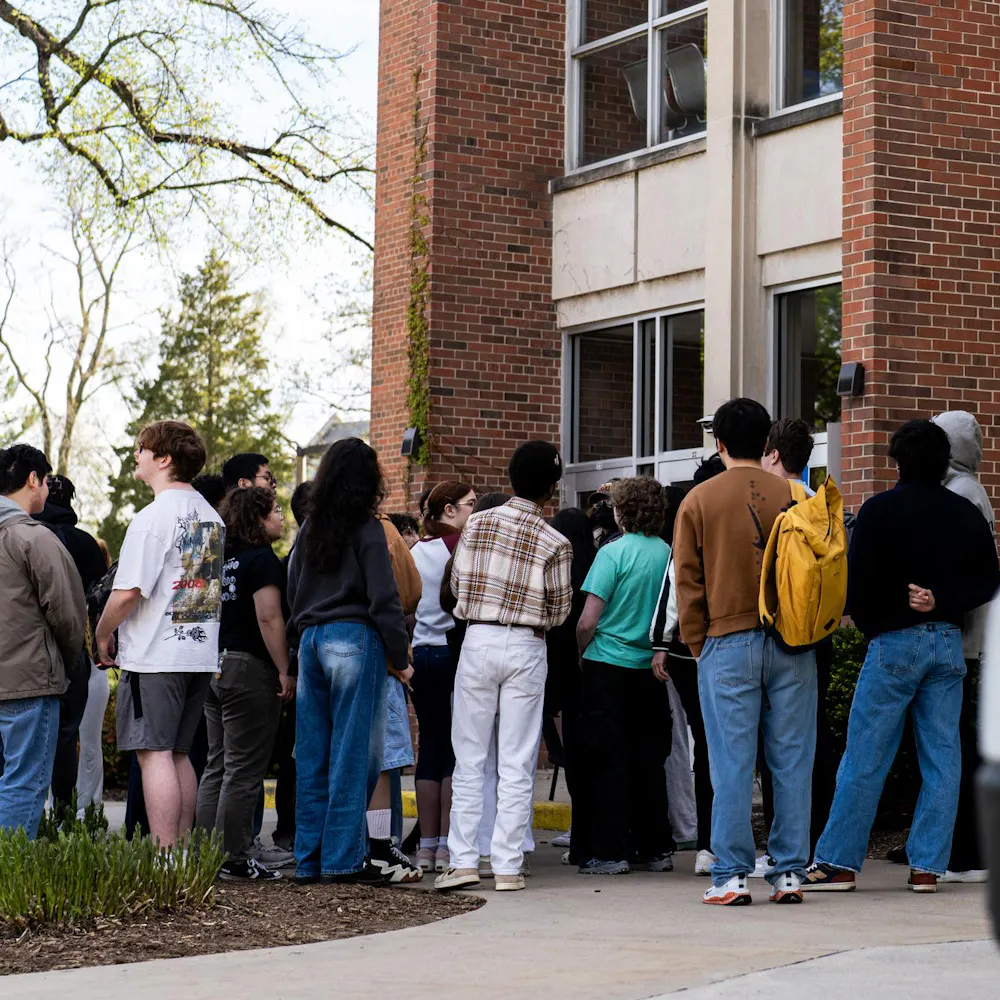
Many students didn't agree with the majority of trustees and say tuition increases need to end.
"I think it's a crime that they keep raising it," said food industry management senior Khari Williams.
Tuition should only be raised to increase the quality of education at MSU, kinesiology junior Alicia Henderson said.
But some students felt the university has done its part to keep costs down.
"It's not the highest," accounting senior Sean Gallagher said.
"They've done a pretty good job balancing the budget compared to other Big Ten schools."
University officials also cited the Tuition Guarantee as another way MSU students saved money compared to other Michigan and Big Ten universities. The guarantee started in 1994 and promised not to raise tuition above the rate of inflation until 2001 when state appropriations decreased.
Because of the guarantee, MSU students saw an average 4.6 percent tuition increase while other Michigan universities raised tuition by 6 percent and 6.6 percent in the Big Ten.
MSU is not the only Michigan university to raise tuition for the fall.
Northern Michigan University announced a 6.9 percent increase in May and Oakland University officials approved a 10 percent hike in tuition fees on Wednesday.
The board also approved a $9.4 million increase in financial aid to help out students who are in danger of leaving the university because of the rise in cost.
The entire increase will be in the form of grants, so many students won't be forced to take out more loans, said Rick Shipman, director of the Office of Financial Aid.
How to award the money is still being decided, but some of the money will be given to those on a need basis and a portion also might be distributed across the board as a flat rate for students, Shipman said.
"We're going to continue to find every dollar," Interim President Lou Anna Simon said.
If state appropriations are less than the expected 10 percent or if any more money comes in next year, it will go toward the students and not to reinstating academic programs, Simon said.
To meet the $31-million cut, the university has canceled 15 academic programs and put moratoriums on 16 others. About 140 full-time employees have been laid off and another 100 more in layoffs are in the works, Simon said.
More adjustments will be made to university programs and staff in the upcoming months, she said.
Although the board did approve a 3 percent salary increase for faculty and staff, the university will probably still be paying employees one of the lowest salaries in the Big Ten. An increase in compensation benefits, including $5 million for health care, places MSU fifth among other Big Ten universities, said David Byelich, director in the Office of Planning and Budgets.
Although some faculty and staff members might be donating their salary increase back to the university, the board did not plan for that in the approved budget, Simon said.
"We didn't want to force a give-back," she said. "Our salaries aren't that large that (the donation) will make a dent in the budget, but it comes from the heart."
University employees championed for tuition increases because without it MSU would be in a state of mediocrity, said Leo Sell, chairperson of the MSU Administrative Professional Association which is in affiliation with the Michigan and National Education Associations. The increase in compensation is at minimal levels, he said
Several of the university's layoffs have occurred in his union and more are expected, Sell said.
"These are real people," he said. "They're all people who are providing services to this institution.
"Every layoff notice I get in the future, I will think back to this meeting."
Staff writer Natosha Diggs contributed to this report.
Stephanie Korneffel can be reached at korneff2@msu.edu.